Coming soon · targeted fall 2026
XLID98 International Registry
Helping families today. Advancing treatments for tomorrow.
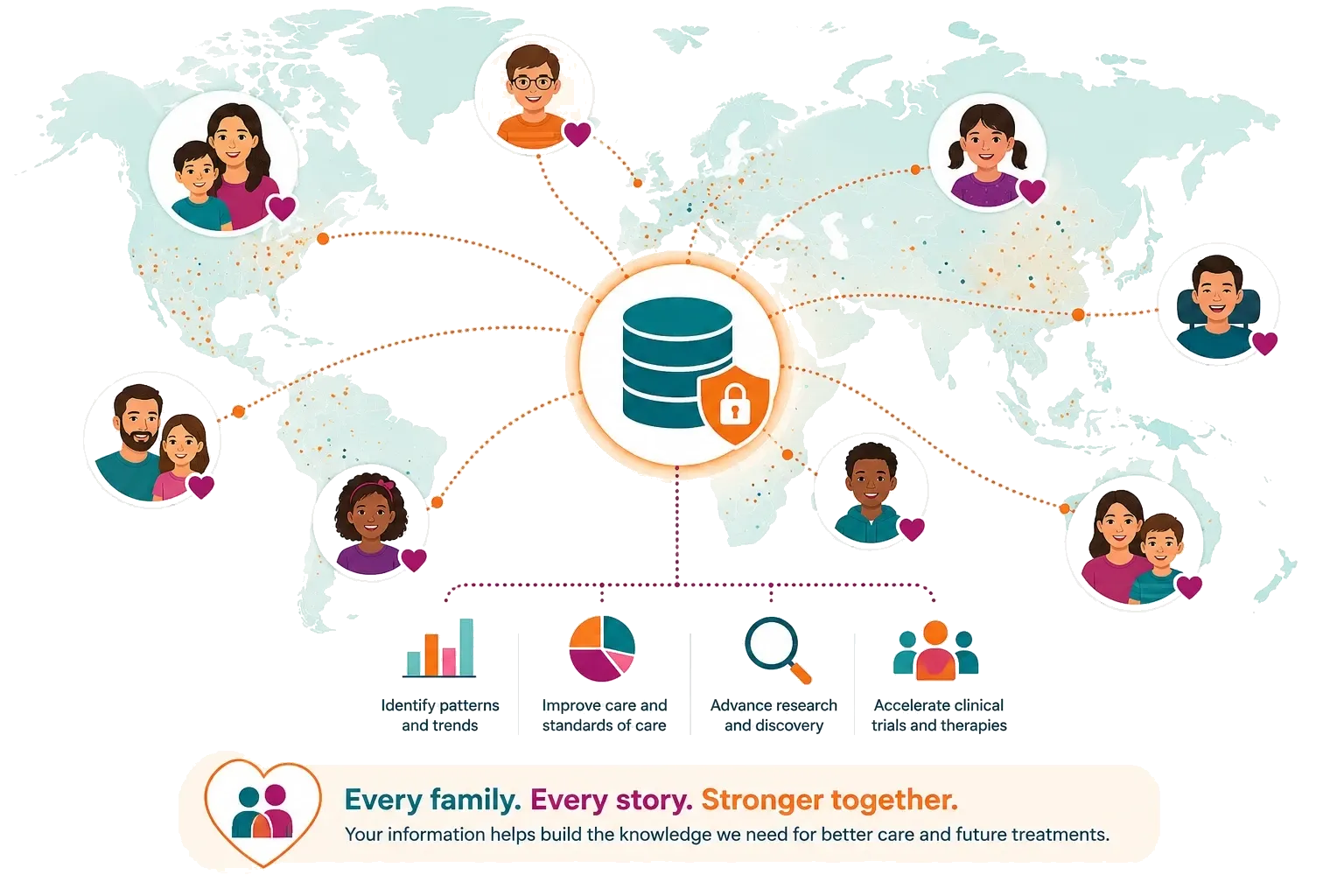
The XLID98 International Registry is a secure global database designed to improve our understanding of XLID98, also known by other names including NEXMIF, NEXMIF-related syndrome, KIAA2022, and MRX98. By bringing together information from individuals and families around the world, the registry will help researchers better understand how the condition changes over time, identify patterns in symptoms, improve standards of care, and accelerate the development of future treatments.
Every family that participates contributes valuable information that may help answer questions no single clinician or researcher could answer alone.
Why Is the Registry Important?
Because XLID98 is extremely rare, information about the condition is scattered across many countries and medical centres. A natural history registry brings this information together to create a clearer picture of the condition across the lifespan.
The registry will help researchers:
- Better understand the full range of XLID98 symptoms and how they change over time.
- Identify patterns that may lead to new research discoveries.
- Improve clinical care and develop evidence-based standards of care.
- Support the development of future clinical trials and emerging therapies.
- Connect eligible families with research studies and clinical trials.
- Provide researchers with high-quality, de-identified data to advance scientific discovery.
For regulatory agencies, including the U.S. Food and Drug Administration (FDA) and Health Canada, registry data is very helpful and strengthens the case for future therapies.
About the Registry
Built on a Trusted Platform
The XLID98 International Registry is being developed on the IAMRARE® Registry Platform from NORD (National Organization for Rare Disorders), one of the world’s leading rare disease registry systems. It has ethics oversight through Queen’s University (Kingston, Ontario, Canada) and is expected to launch in Fall 2026.
Who Can Participate?
Participation is open to individuals with a confirmed NEXMIF (formerly KIAA2022) genetic variant associated with XLID98 / MRX98.
What Does Participation Involve?
Participants create a secure private account and receive a unique de-identified study ID. The registry includes questionnaires about medical history, development, symptoms, treatments, and quality of life. Families may complete the questionnaires at their own pace, skip questions if they wish, and return later to finish them.
Completely Voluntary
Participation is entirely voluntary.
Your Privacy
Protecting your family’s privacy is a top priority.
The Foundation does not share your personal identifying information with researchers. Instead, researchers may apply to access de-identified registry data through an approved review process. If a research study or clinical trial may be relevant to your family, the Foundation can contact you on the researcher’s behalf, allowing you to decide whether you wish to participate.
For more information about how we collect, use, and protect personal information, please read our Privacy Policy.
Building a Better Future Together
Every person who joins the registry helps strengthen our collective understanding of XLID98. As more families participate, the registry becomes an increasingly powerful resource for researchers, clinicians, and the entire XLID98 community.
Together, we are building the knowledge needed to improve care, accelerate research, and bring effective treatments closer to reality.
A link to join the registry will be available here when the registry launches.