Research program
Precision Medicine Project
Building Human Neuron Models to Test Future Treatments
One of the most exciting areas of XLID98 research is precision medicine. Instead of studying the condition only in animals or computer models, researchers can now create human nerve cells (neurons) from donated patient cells.
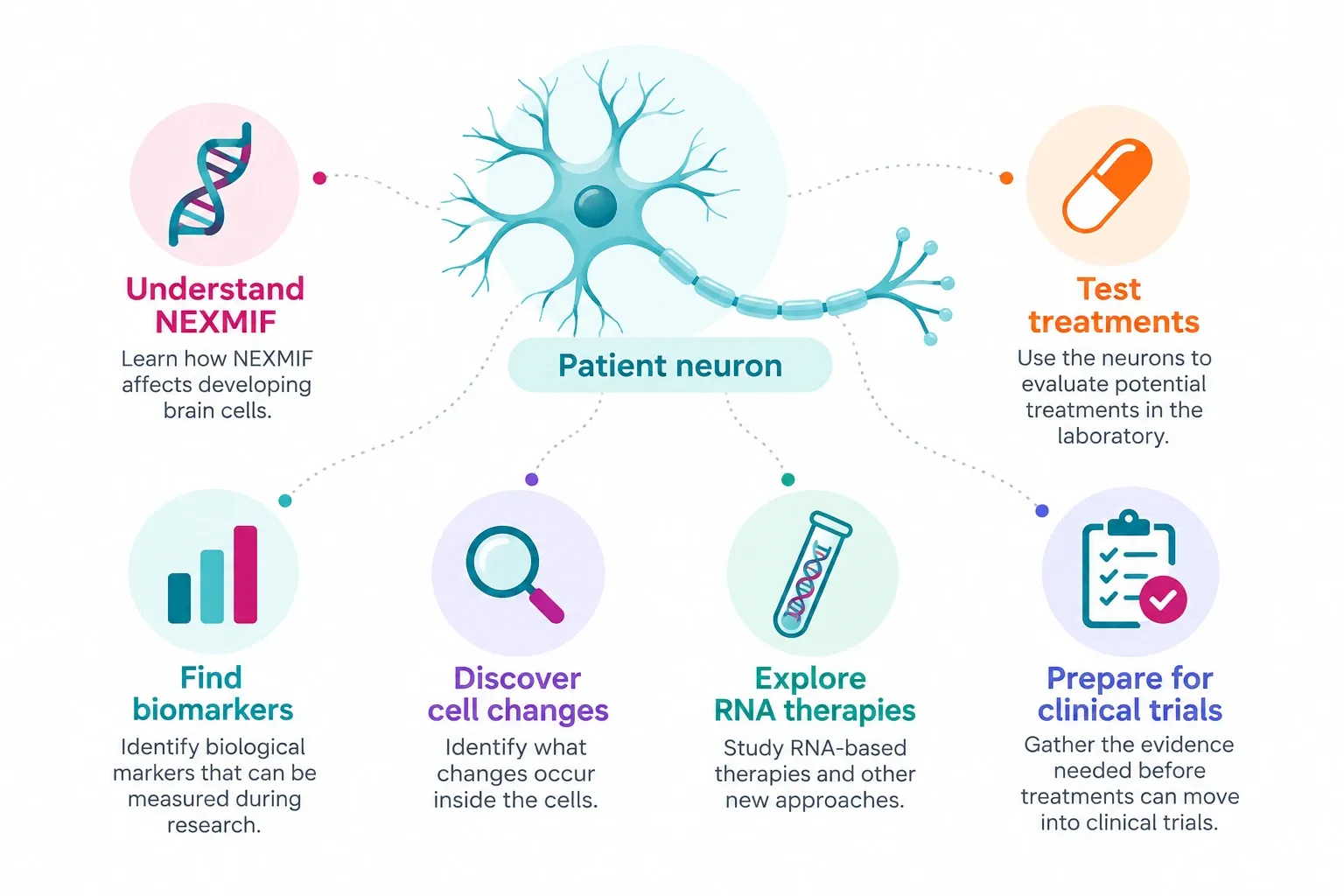
These neurons carry the same NEXMIF genetic changes found in people living with XLID98. They give researchers a powerful new way to understand the condition and safely test potential treatments in the laboratory before moving toward clinical trials.
How Are These Neurons Made?
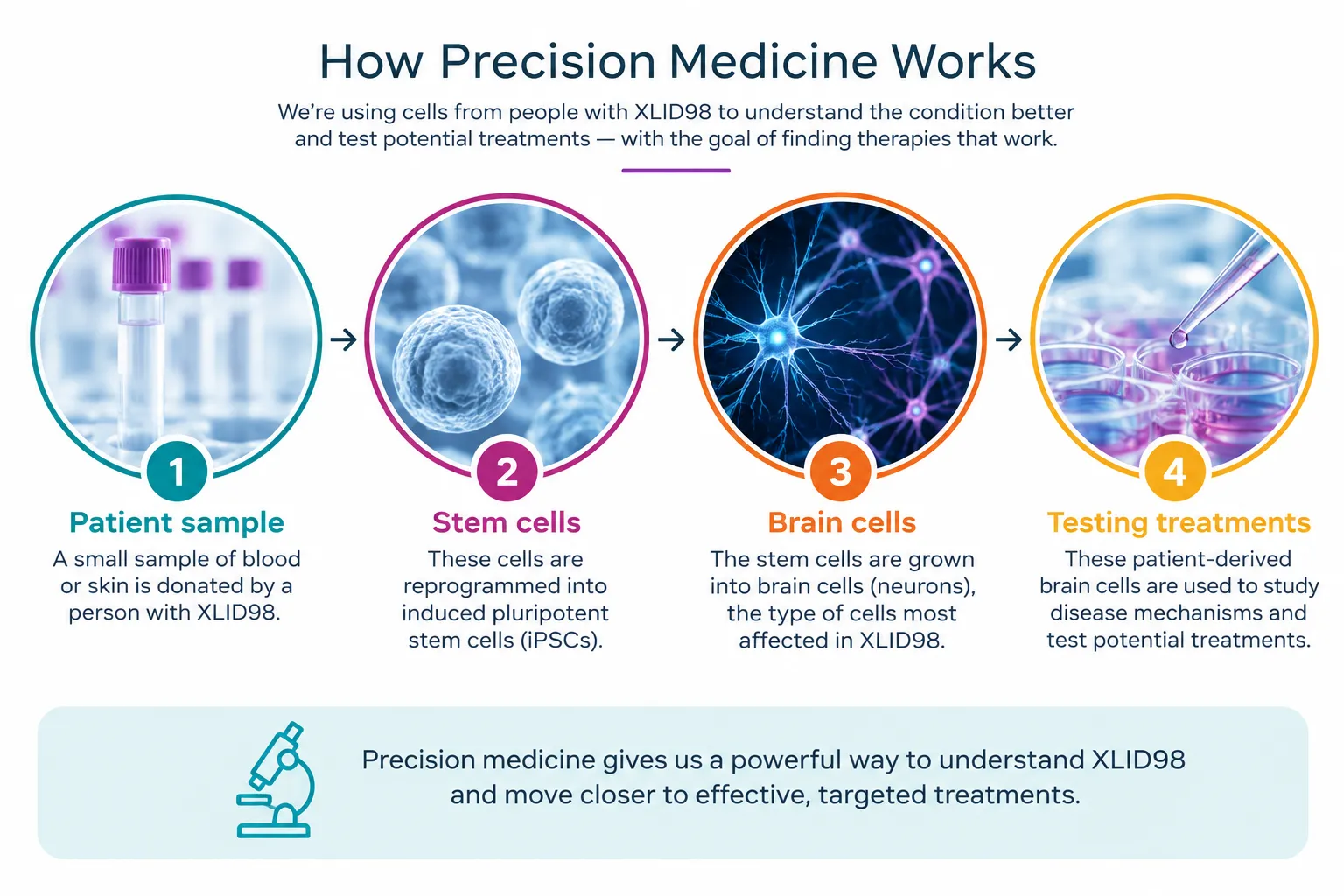
Researchers cannot safely take brain cells from a living person. Instead, they start with a small sample of blood or skin from someone with XLID98.
They use these cells to create special stem cells called induced pluripotent stem cells (iPSCs). These stem cells can then be turned into many different types of cells, including brain cells called neurons.
Because these neurons have the same NEXMIF genetic change as the person who donated the cells, they allow researchers to study XLID98 and test possible new treatments in the laboratory.
What Can These Neurons Help Researchers Do?
Why Is This Important?
Many promising treatments fail because researchers do not have good human models to test them.
By creating well-characterized XLID98 neurons, researchers can learn much more about the condition before testing treatments in people.
This helps identify the most promising therapies while reducing time, cost, and risk.
Building a Resource for the Whole Research Community
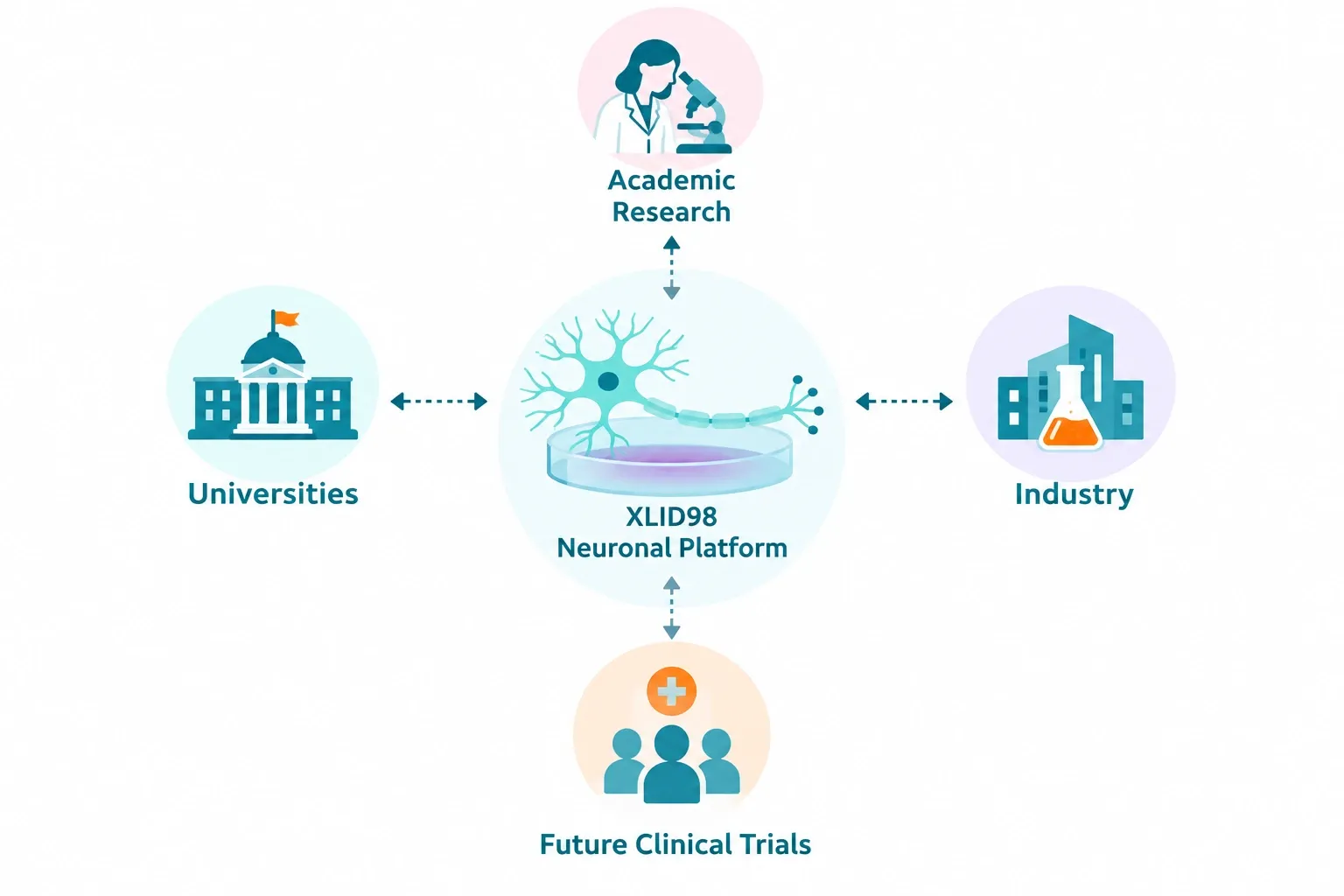
The XLID98 Foundation is working with researchers to build a high-quality neuronal platform that can be shared with the wider research community.
Our hope is that this resource will:
- support academic research around the world
- attract biotechnology and pharmaceutical partners
- help evaluate new therapies as they are developed
- strengthen future grant applications
- accelerate the path toward clinical trials
Rather than supporting a single research project, we are helping build scientific infrastructure that can benefit XLID98 research for many years.
Where We Are Today
We already have patient cells donated by families in our community.
The next step is to transform those cells into neurons and build the research platform that scientists can use to study XLID98 and test future therapies.
This work requires funding, but it has the potential to become one of the most important research resources available for XLID98.
Looking Ahead
No single project will cure XLID98.
But every new research tool brings us closer.
By helping researchers better understand how NEXMIF affects human neurons, and by giving them a way to test promising treatments, we hope to build a bridge between scientific discovery and future clinical trials.